Full review
systeme.io is the all-in-one marketing platform that answers "everything, for less." It bundles funnels, a website builder, email marketing, automation, and an online-course builder into a single subscription at a price that undercuts nearly every competitor in this niche, with a genuinely free starter plan that lets a bootstrapped founder begin without paying anything. For a solo creator or small business that wants a complete marketing platform without stacking five paid subscriptions, that price-to-breadth ratio is the reason it is the recommendation here.
**The all-in-one scope is the core pitch.** A user can build a sales funnel, stand up a website, run email campaigns and automated sequences, and sell an online course, all inside one account, with the audience and customer data shared across every piece. That means a lead captured by a funnel is the same contact that receives the email follow-up and the same customer who buys the course, with no importing or syncing between tools. For a creator starting from zero, the practical value is that the entire business can run on one platform from day one, and the platform replaces tools that would otherwise each carry their own monthly fee. This is an all-in-one marketing platform in the literal sense: one account, one shared audience.
The funnel and course components are where it earns its keep for the audience it targets. Like the dedicated funnel builders, it provides prebuilt funnel templates and the landing-page-to-checkout-to-upsell sequence that turns traffic into sales; like the dedicated course platforms, it provides course-hosting and selling. The honest trade-off is depth. An all-in-one is broad rather than best-in-class at any single thing, so a team that needs the most powerful automation engine or the deepest course features will outgrow it, and the step up from there is a dedicated platform such as Teachable for courses, or a CRM-centric system like ActiveCampaign for pipeline.
The fit is specific to the solo creator who wants build funnels and courses in one place on a tight budget. It is the affordable marketing SaaS option when the goal is to get a complete stack running cheaply rather than to maximize the power of any one tool. For that audience, the breadth at this price is hard to beat, and the free tier makes the trial cost nothing.
For a bootstrapped creator or small business that wants funnels, email, automation, and courses in one low-cost platform, this is the all-in-one marketing platform to try. Stand up a funnel and a course on the free plan and confirm the lead, the email, and the student are one record.
Why this helps you
Small businesses and creators are usually over-subscribed and under-staffed. The email platform, the funnel tool, the course platform, and the website builder each charge monthly, each teaches you a new interface, and none of them share the audience data. systeme.io packs funnels, website building, email marketing, automation, and course tools into one account, so a small team stops paying five invoices for one business.
That consolidation is the time benefit in its purest form. One login, one invoice, one place to find your subscribers. When a customer appears in the funnel, the email, and the course, you stop asking which system knows them, because the data is shared across every tool in the account. For a bootstrapped business, those saved hours and saved subscriptions are the product.
The honest price ladder is the other reason small teams choose it. A genuinely free starter plan plus low-cost paid tiers means you can learn the workflow before you commit, and the upgrade math is readable without a sales call.
How it saves you time
Shared audience and customer data remove the export-and-reimport routine. The person who joined the email list, clicked the funnel, and enrolled in the course is one record, so follow-up can reference the whole journey. That removes the glue work that otherwise eats the week of anyone running three tools.
Prebuilt funnel templates and landing-page-to-upsell sequences remove the blank-page work. You start from a structure, adapt it to your offer, and spend your hours on the message instead of the plumbing. Automation carries the follow-up after the sale, and the website builder keeps the whole presence in the same account, so the site, the list, and the store stop being three projects.
What you get, feature by feature
- All-in-one stack with funnels, website builder, email marketing, automation, and course builder: five jobs share one account, which removes five subscriptions and the weeks spent learning them.
- One subscription stands in for five separate tools, and the free starter plan means the test itself costs nothing.
- Genuinely free starter plan with low-cost paid tiers: you learn and launch before you pay, and the upgrade ladder is easy to read.
- Shared audience and customer data across every tool: one record per person, so follow-up references the whole journey and exports stop.
- Prebuilt funnel templates and landing-page-to-upsell sequences: your first draft exists before you build, which removes the blank page from every campaign.
- Open affiliate program that is free to join with no application: non-customers can refer, which lowers the barrier for creators evaluating the tool.
Your first week getting set up
Use the free starter plan to build one funnel and one email sequence. Connect the signup to the funnel, and send one campaign to the list. That first loop teaches you the shared data model in practice: one person, one record, every tool aware. Before you upgrade, test the automation on a small segment, so you know the rules work before you scale them.
A realistic week with this tool
You write the email, check the funnel numbers, and let the automations handle follow-up. The course enrolls, the funnel captures, and the email reports back, all in the account you already have open. The hours you do not spend are the hours not spent exporting lists, reconciling platforms, or learning a second interface for the second half of the same job.
Plans, and what to check
The free starter plan covers the start, and paid tiers have historically run around $14 to $17 a month for Startup, $39 to $47 for Webinar, and $80 to $97 for Unlimited, with exact prices that change over time. Treat those figures as approximate and check the provider page for the current ladder. The useful comparison is which tier unlocks the automation and funnel capacity you plan to use, because that is usually the limit that decides when you upgrade. Price the tier for the business you are building this year.
Where it fits, and where it does not
This is the right fit for bootstrapped creators and small businesses that want a complete stack at the lowest cost. It is not the pick for teams that need specialist depth in one channel, such as an enterprise CRM or a dedicated newsletter-growth platform, where the specialists will go further. Agency teams should check seat and reporting limits before committing. Choose systeme.io when one account should carry the whole stack.
Frequently asked questions
Is the free plan actually usable. Yes, for learning and launching. You can build a funnel, send email, and see the shared data model work before you pay anything. The free tier stops being enough when your list and automation volume pass its limits, and the platform tells you plainly when that happens. Start free, launch small, and upgrade on evidence.
Can it really replace five tools. It replaces the five most common ones for small businesses: email, funnels, website, automation, and courses. What it does not replace is specialist depth in one channel. If your business needs an enterprise CRM or a dedicated newsletter-growth platform, you will outgrow the generalist at some point. The trade is honest: breadth now, specialists later.
How long does the free-to-paid jump take. Usually one to three months for an active small business, because the limits are tied to your list and your automation. Watch the dashboard, know which limit is approaching, and price the next tier before you hit it mid-campaign. The paid ladder is readable, and the jump is a click, not a migration.
What happens to my data if I leave. Export your contacts, your funnel data, and your course enrollments on a regular schedule and keep your own copy. The shared record is convenient, and your own copy is the insurance. An all-in-one account holds more of your business, which makes the export habit more valuable, not less.
Choosing this tool over the alternatives
Against specialist tools, systeme.io trades depth for consolidation. The specialists go further in each channel, charge more, and demand more learning. systeme.io wins for bootstrapped businesses, because one account, one invoice, and one shared record do the work of five logins, and the saved hours compound every week.
Against a course platform, systeme.io trades teaching depth for funnel unity. The course specialist serves large schools better. systeme.io wins when the sell matters as much as the teach, because the funnel, the email, and the course share one record and the launch runs in one place.
Against a newsletter-growth platform, systeme.io trades publication economics for horizontal coverage. The publication platform wins when referrals and ad networks are the bottleneck. systeme.io wins when the business sells products through funnels, because the funnel and course tools are closer to the money.
Common mistakes to avoid
Do not wait to upgrade until the limit bites mid-launch. The tiers are readable, and the jump is easy, so price the next rung before the campaign that needs it. A limit hit during a launch costs more than a month of overbuying.
Do not build five funnels before you send one email. The all-in-one makes breadth tempting, and breadth without traffic is decoration. Build one funnel, connect one sequence, send one campaign, and let the data tell you which tool to use next.
Do not forget the export habit because the account feels complete. Completeness is exactly why the habit matters: more of your business lives here, so your own copy matters more. A quarterly export costs an afternoon and protects years of work.
Getting the most out of your subscription
Run one loop and measure it. Pick one funnel and one sequence, send, and read the shared record. The data shows you the whole journey, so the next improvement is obvious. The platform's value appears in repetition: the second funnel is faster, the third sequence is smarter, and the hours compound.
Make the shared record the daily view. When a customer appears in the funnel, the email, and the course, open the record and see the whole journey. That view replaces the exports, the reconciliations, and the guessing, which is the entire consolidation benefit in one habit.
Keep the ladder honest. Price each tier against the work it does this quarter, not the work you imagine next year. The low-cost ladder is a strength only if you climb it on evidence, and the business stays lean because the upgrades follow the revenue.
Keeping your setup healthy
The stack grows teeth as the business grows. Automations that served a hundred subscribers run differently at ten thousand, and the funnel that converted at launch may leak a year later. Review the setup quarterly: which sequences fired, which funnels convert, and what the shared record says about the buyers. Cleanup is an hour, and it keeps the consolidation benefit instead of drifting into five tools' worth of maintenance in one login.
The offer needs the same review. Prices, bonuses, and promises change, and the funnel still sells the version from launch day. Refresh the pages so they match the business you run today, and retire the sequences that no longer describe anything real. The shared data tells you what to change, because the whole journey lives in one view.
Finally, keep your own copy of everything. Contacts, funnel data, and enrollments in your files protect the business, and the quarterly afternoon is cheap insurance for the account that holds most of it. The platform should earn its place with the consolidation, not with lock-in, and your habit keeps that balance honest.
A word on support and migration
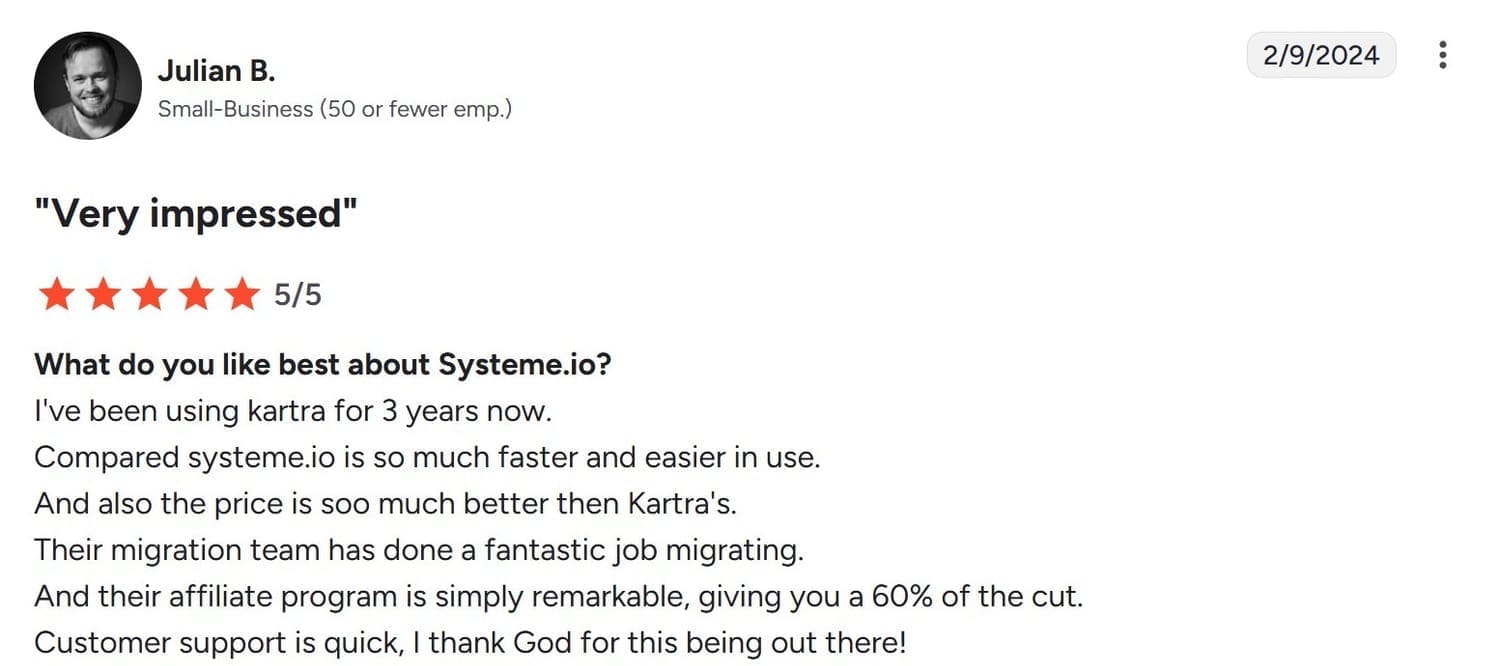
You will have questions the first month, and support quality decides how long the learning curve feels across five tools at once. Check what help exists before you subscribe: templates, tutorials, and a support channel that answers in hours. A small business that can get help quickly launches faster, and launching is the only way to learn what the stack needs.
Migration in is usually an import of your list and an afternoon of rebuilding one funnel from a template. Do it before the first campaign, not during one, and test the automation on your own address first. Keep your own copy of contacts and enrollments from day one, so migration out is a calm export instead of an emergency. The whole lifecycle, in, daily use, and out, should feel boring, and boring is what an all-in-one account should be.