Agency & Client Marketing: Tooling for Multi-Account Delivery
A marketing agency runs a business whose product is other businesses' marketing, and that shapes its tooling needs in a way that a single-company stack never experiences. Every tool an agency adopts has to work for a portfolio of clients, not one brand , and it has to work at a cost that leaves the retainer profitable. An agency that buys tools the way a single business does ends up with a stack that is either too narrow (one client's needs covered, the rest improvised) or too expensive (a premium subscription multiplied across every account). The agency tooling decision is really a margin decision.
The work of an agency happens in three layers, and each has its own tooling logic. The delivery layer is where client work is executed: funnels built, email campaigns run, social calendars maintained, SEO programs advanced. The reporting layer is what keeps clients paying: the dashboards and summaries that translate activity into outcomes. The acquisition layer is the agency's own marketing , the content, case studies, and referrals that fill the pipeline. The strongest agency stacks are the ones where a single platform covers a layer completely, because every additional platform in a layer adds a login, a data export, and a line item that has to be justified to the client.
The SEO and research layer is the clearest case for a dedicated, agency-grade platform. Client SEO work runs on data: keyword research that finds the opportunities, rank tracking that proves movement, site audits that surface the technical fixes, and competitive analysis that positions the client against rivals. Semrush covers that territory with the depth agencies need , its toolkit structure lets an agency match the tool to the engagement , and its pricing scales with the product sold, which keeps the math easy to explain to clients, and makes it a natural fit for agencies that both use and recommend it. Moz serves the same layer with a focused, established tool. For an agency, the platform choice here is sticky in a good way: the client's historical data lives in the tool, so switching costs rise the longer the engagement runs.
The CRM and inbound layer matters for agencies serving B2B clients, where marketing's job is to feed a sales pipeline. HubSpot is the anchor here: its CRM-first architecture means the marketing campaigns an agency runs and the sales pipeline the client's team works live on one platform, which turns the agency's reporting into pipeline evidence rather than vanity metrics. HubSpot's long evaluation window is unusually well-matched to B2B reality , a client evaluating a CRM takes months, not days, and the window matches the decision. For agencies whose clients are B2C direct-response, ClickFunnels plays the same anchor role on the conversion side: funnel builds, upsells, and checkout flows, with terms that stay the same for as long as the client keeps the account. That structure aligns the affiliate's interest with retention, which is exactly how an agency should think about its own clients.
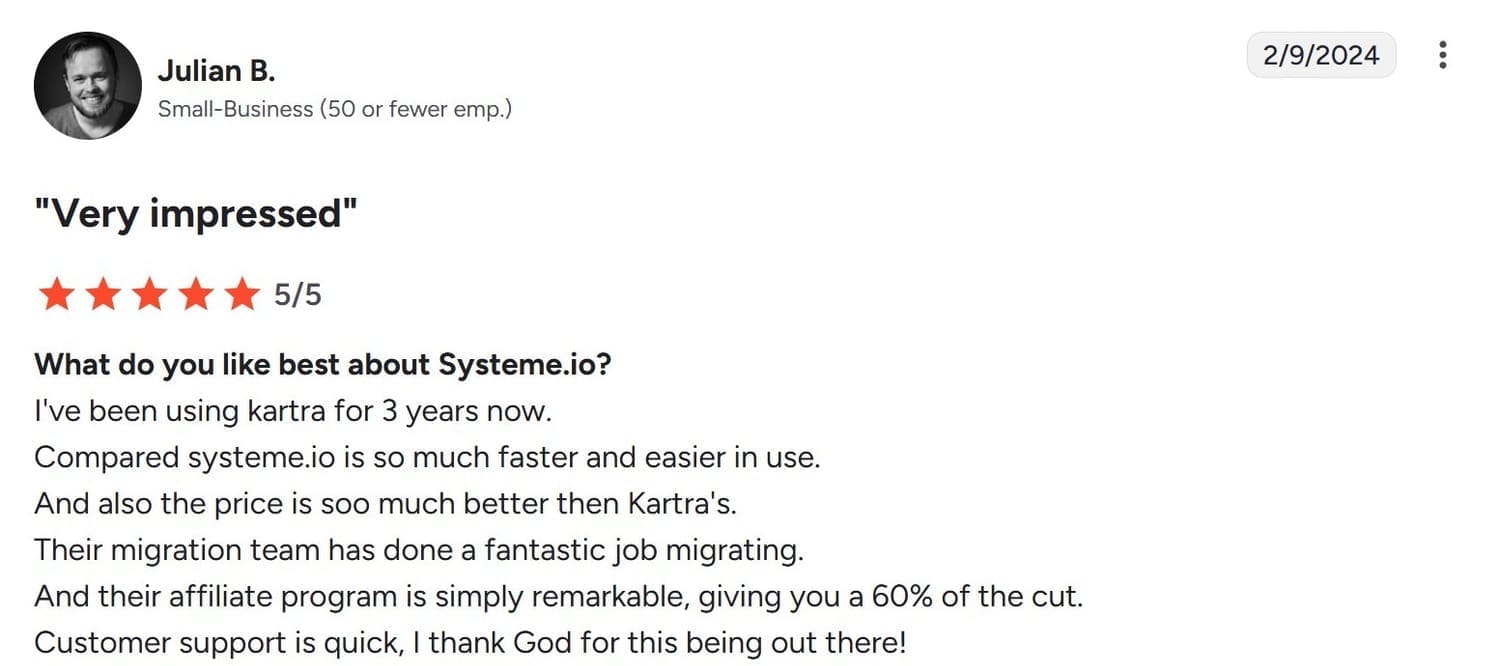
The delivery layer for social and smaller engagements rounds out the stack. Buffer's agency track exists precisely for the multi-client social workflow , one calendar, many accounts , and its per-client structure means an agency that moves a roster onto the platform gets one consistent setup across all of them. For smaller retainers where a premium stack would consume the fee, systeme.io offers the low-cost all-in-one: funnels, email, automation, and courses at a price point that keeps a modest engagement profitable, at a price point that keeps a modest engagement profitable. The strategic point is not that every agency needs every tool , it is that each layer should have one platform the agency knows deeply, applied consistently across clients.
Standardization is the discipline that makes the stack pay. An agency that runs every client through the same core platforms accumulates expertise that compounds: faster builds, fewer mistakes, reusable templates, and reporting that clients learn to read. It also accumulates leverage with the vendors , volume, partner status, sometimes better terms. The agency that customizes the stack for every engagement, by contrast, spends its margin on integration work and its energy on relearning tools. The consistency logic reinforces the same point: terms that hold steady for as long as the client stays reward an agency that standardizes on platforms with strong retention. The best time to choose the agency stack deliberately is before the next client signs , not after.